Coaching couples and friends together

When two clients book a joint session, the appeal is obvious: they benefit from shared motivation and reduced individual costs, while you maximise your hourly rate. However, shifting from a one-to-one relationship to managing a duo fundamentally changes the training environment. We often see coaches struggle when personal dynamics or unbalanced fitness abilities disrupt the flow of a session. Success requires a deliberate strategy to keep both participants engaged, safe, and progressing toward their respective goals.
Assessing individual starting points
A common mistake is treating a joint session as a single, compromise workout where both clients perform the exact same movements at the same intensity. This rarely works, as even close friends or spouses often have vastly different mobility limitations, biological baselines, and fitness goals. Before their first joint session, we recommend conducting separate consultations and physical assessments for each client. This initial individual focus allows you to establish baseline metrics, uncover past injuries, and understand private motivations that they might not feel comfortable sharing in front of their partner. From there, you can design a dual programme built on tailored progressions and regressions.
Managing the logistics of dual programming
- Use time-based intervals rather than fixed repetition targets so that neither client feels rushed or left waiting for the other to finish.
- Pair complementary movements, such as one partner performing a working set while the other completes an active recovery stretch or core exercise.
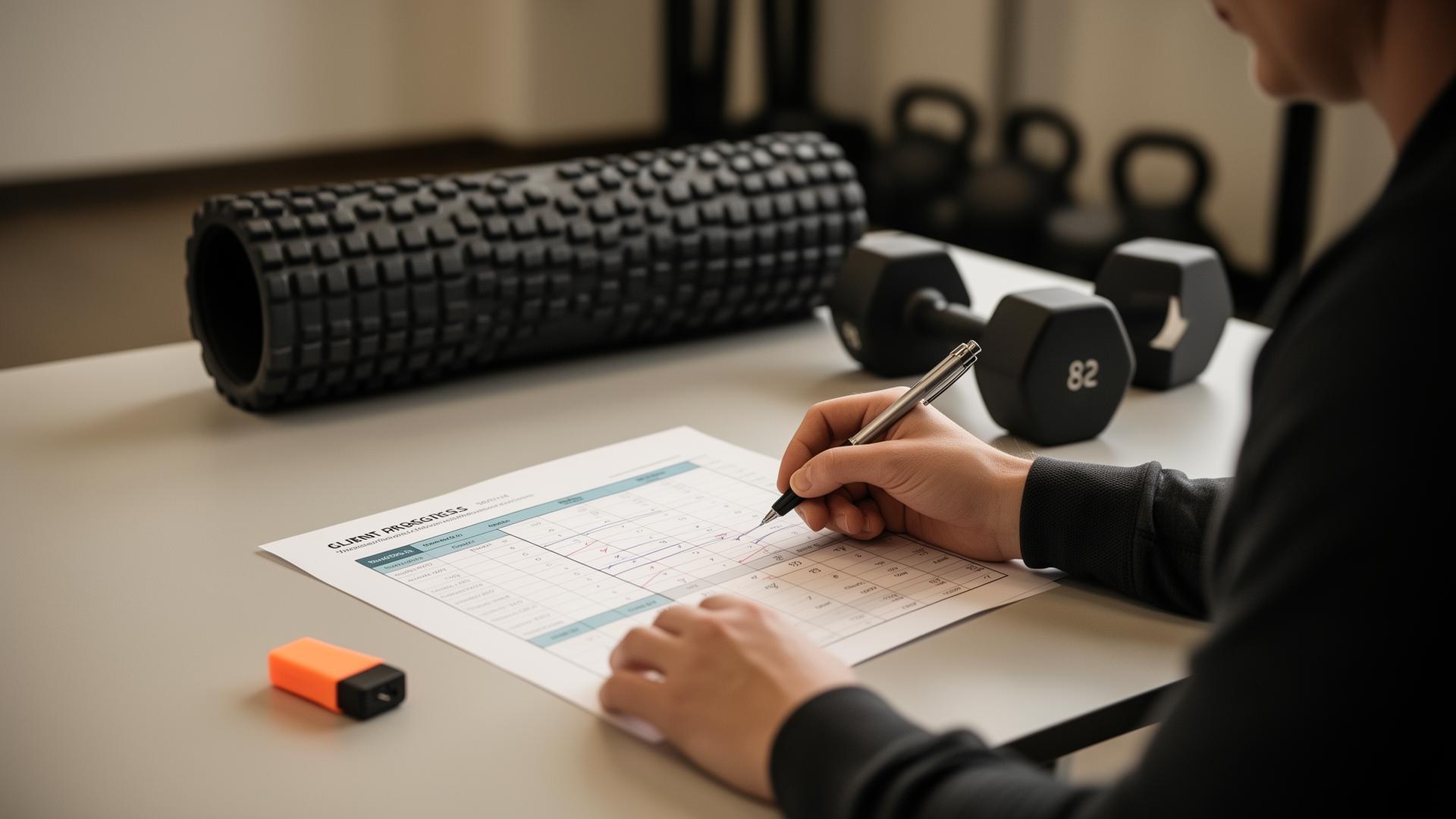
- Keep a detailed double-entry training log to track individual weights and modifications without relying on memory during a fast-paced session.
- Position yourself physically so you can maintain a clear line of sight on both clients' form simultaneously, avoiding excessive focus on one person.
- Establish clear boundaries regarding distractions, ensuring that social chatter between the pair does not compromise the structure of their rest periods.
Navigating personal relationships and communication
Working with couples or close friends introduces a layer of interpersonal psychology that requires careful management. You may encounter friendly competition, which can be highly motivating, but you must also look out for silent frustration or unhealthy comparison. If one partner progresses faster, the other may feel discouraged or try to lift unsuitable weights to match them. Your role is to redirect the focus back to individual achievements and form. We advise keeping your feedback balanced and objective, ensuring both clients receive equal attention, praise, and constructive correction throughout the hour to avoid feelings of exclusion.
Handling cancellations and scheduling imbalances
One of the most practical challenges of joint coaching is scheduling. When one partner is injured, falls ill, or has a last-minute schedule change, your entire session structure is affected. You must establish a clear policy in your signing agreement that dictates how these situations are handled. For instance, define whether the remaining partner can train alone at your standard individual rate, or if the session is billed as normal regardless of attendance. Having these clear, professional guidelines in place from the outset prevents awkward financial conversations and protects your business revenue while maintaining client trust.
"A successful joint coaching session is never a compromised single workout; it is the seamless execution of two distinct programmes running side by side."
Dr Priya Shah
Head of Coaching Practice, REPs
Priya leads coaching standards at REPs and has spent fifteen years coaching and mentoring coaches across the UK.