Recognised vs unrecognised fitness qualifications in the UK

The United Kingdom's fitness training sector features a wide array of educational routes, but not all courses qualify you to work safely with the public. Every week, we receive numerous directory registration applications at REPs supported by certificates from unrecognised training providers. This guide clarifies exactly how we distinguish between regulated, industry-standard qualifications and unaccredited online schemes. Understanding these critical differences ensures that your educational investment is legally compliant, fully insurable, and respected by major employers across the health and leisure sectors.
The Regulated Qualifications Framework and CIMSPA alignment
To be formally accepted by REPs, a practitioner's certificate must be registered on the Regulated Qualifications Framework (RQF) for England and Northern Ireland, or the equivalent Scottish Credit and Qualifications Framework (SCQF). These qualifications are heavily regulated by independent government executive bodies such as Ofqual in England, the CCEA in Northern Ireland, or the SQA in Scotland. They are developed and awarded by approved organisations including Active IQ, YMCA Awards, and Focus Awards, which align their syllabi directly with the professional standards maintained by CIMSPA. If your chosen training provider cannot explicitly name the regulated awarding organisation that validates the final certificate, or if they claim to issue their own private certification, the course is highly unlikely to meet our verification requirements.
Why we maintain strict standards for our register
- Regulated qualifications guarantee that the student has completed a mandatory minimum number of tutor-led guided learning hours.
- Practical assessments are conducted under strict exam conditions, requiring real-time coaching demonstrations rather than theoretical self-assessment.
- The underlying anatomy and physiology syllabus is standardised nationwide to ensure every practitioner possesses a safe level of biological knowledge.
- Prominent public liability insurers in the United Kingdom mandate a regulated qualification to validate any professional indemnity coverage.
- Major gym operators, public leisure trusts, and council facilities require these specific standards to satisfy their municipal health and safety compliance.
- Independent verification ensures that grading is objective and free from the commercial bias of the tuition provider.
Red flags of unrecognised training providers
Identifying an unrecognised training provider is relatively straightforward if you know which indicators to watch for during your initial research. Unaccredited academies frequently market cheap, accelerated courses that claim to transform you into a fully qualified personal trainer over a single weekend. These low-cost alternatives often lack any face-to-face contact, peer interaction, or real-time assessment, relying entirely on basic, automated multiple-choice testing. Furthermore, these providers often use ambiguous marketing jargon such as 'internationally accredited' or 'globally approved' without specifying which external regulated awarding body actually validates the credential. A legitimate, high-quality training provider will always display their specific centre approval number alongside the official logo of Ofqual or their awarding body.
How to perform a manual certificate check
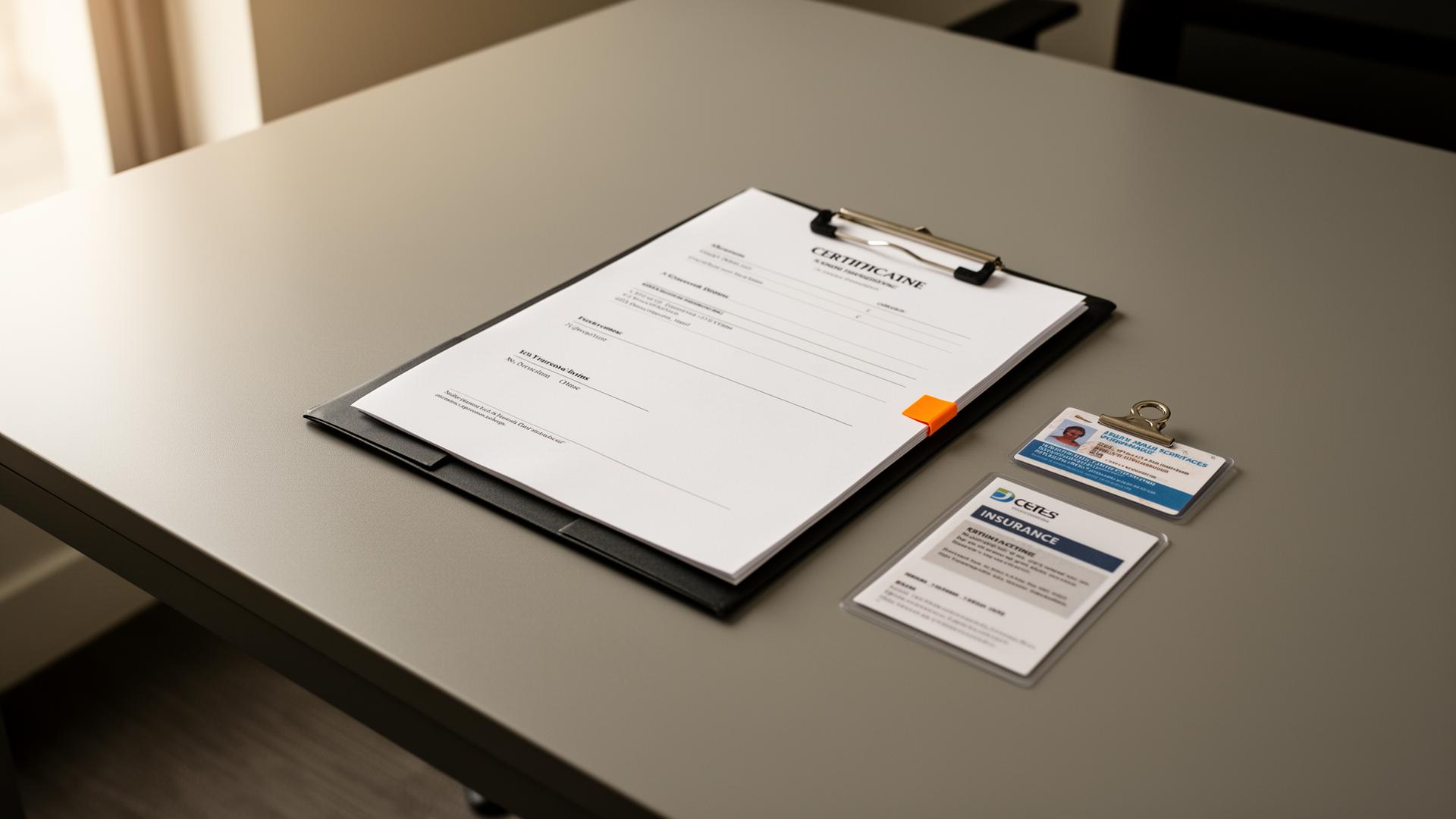
Before launching your professional fitness career or submitting your credentials to the REPs registry, we strongly advise executing a thorough verification check. Begin by inspecting your physical or digital certificate for the official logo of Ofqual, SQA, or Qualifications Wales, which must sit alongside the awarding organisation's branding. Locate the unique Qualification Number, which typically uses an eight-digit alphanumeric format. You can run this exact code through the government's online Register of Regulated Qualifications to verify its active status. Additionally, contacting the awarding body directly can confirm that your training provider is currently registered as an audited and approved centre to deliver that particular programme.
"Verifying a qualification is not about creating administrative hurdles; it is the fundamental safeguard protecting both consumers and the integrity of our profession."
The REPs Standards Team
Standards & Verification
The REPs Standards Team is responsible for the verification framework, complaints process and the public register.